For security reasons, you will be logged out in 4 minutesCannot be added!Your basket contains a blocked quote and must be finalised before you can order other items.Add to basket...Item added to basket
Express
order
Display
my quote
Basket0

Facellitate : What revêtements anti-adhérents for cell culture 3D?

Facellitate is a German specialist in non-adhesive coatings for 3D cell culture. Born out of the BASF ecosystem, the brand brings unique polymer expertise into biology to rapidly generate homogeneous spheroids and organoids. Its solutions, including the BIOFLOAT range (plates and films), serve academic labs, biotechs and pharma engaged in screening, oncology, toxicology and regenerative medicine. The goal: reproducible, simple 3D, compatible with imaging and automation from the very first experiments.
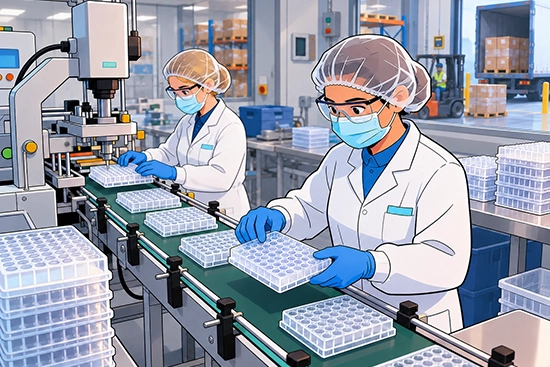
A chemistry spin-out serving biology

Born within the BASF innovation ecosystem (the Chemovator incubator), Facellitate has shaped its mission around a simple premise: 3D cell culture should be as reliable and standardised as 2D. Drawing on deep expertise in polymer surfaces, the team turns a surface-chemistry concept into practical tools for biology. Based in Germany, the company works closely with researchers, continually refines its coatings and strengthens product ranges centred on the formation of homogeneous spheroids and organoids. From proof of concept to the first large-scale R&D deployments, it stays true to the same guiding principle: quality, ease of use and reproducible results — accelerating the shift to 3D in laboratories.

Expertise and areas of specialisation

The strength of Facellitate lies in surface chemistry applied to 3D cell culture. Its proprietary low-attachment coating minimises non-specific protein adsorption and prevents cell anchorage, promoting the self-assembly of regular spheroids and organoids. The result: more homogeneous, better standardised structures that are ready for analysis.

On the product side, the BIOFLOAT range includes ready-to-use plates for R&D assays (from low to high throughput), as well as BIOFLOAT Flex, a coating film that turns existing labware into low-attachment surfaces. The consumables are sterile, easy to use and compatible with standard media, imaging (brightfield, fluorescence) and plate readers.

Key applications: oncology screening, toxicology, stem cell aggregates (embryoid bodies, EBs), organoid models, pharmacokinetics/pharmacodynamics studies and candidate validation. The surfaces are engineered to fit automation workflows (robotic pipetting, liquid handling), with lot-to-lot consistency that safeguards experimental series and cross-project comparisons.

Why is the brand recognised? For the reproducibility of results, the simplicity (ready to use, no heavy ancillary steps) and the versatility across cell lines and cell types. By reducing surface variability, Facellitate makes scale-up easier, from exploratory testing to robust screening. All products are for research use only (RUO).

Facellitate products distributed by Dutscher

Frequently asked questions about the Facellitate brand

Which 3D products does Facellitate offer?
BIOFLOAT low-attachment plates for spheroid/organoid formation, and BIOFLOAT Flex to convert standard labware to low-attachment.

Are the consumables compatible with imaging?
Yes, the surfaces support brightfield and fluorescence imaging, and allow readout on standard plate readers.

Can protocols be automated on these plates?
Yes, their geometry and surface are optimised for robotic pipetting and high-throughput screening workflows.

How reproducible are the spheroids?
The coating minimises non-specific adhesion, enabling more uniform aggregates with consistent batch-to-batch results.

Are these products suitable for different cell types?
They are designed for a broad range of lines and cell types (cancer, stem, primary) using standard R&D culture media.

Are the products intended for clinical diagnostics?
No, they are supplied for research use only (RUO) and are not medical devices.